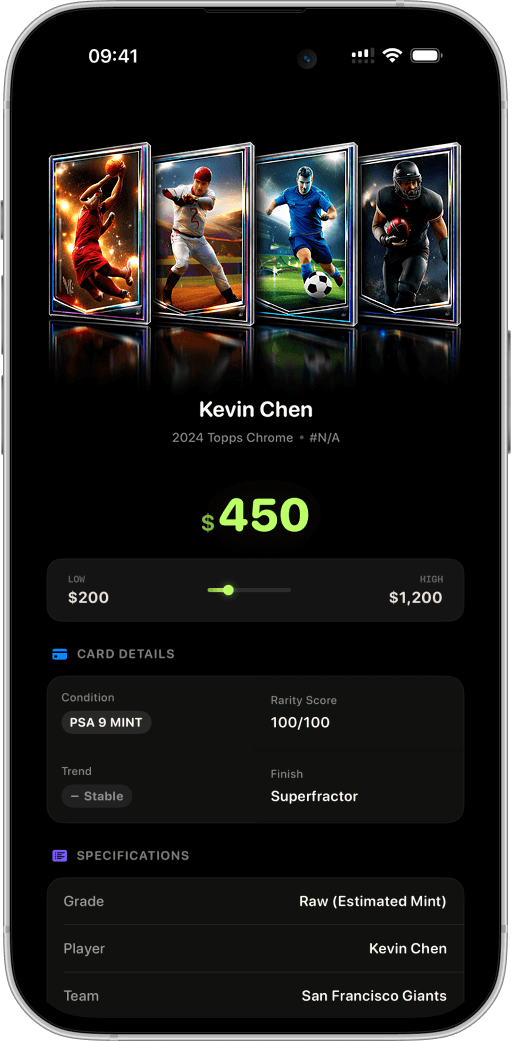
What to look for when you sort
A card's value comes from four things: who is on it, what year and brand printed it, how rare that version is, and what shape it is in. The year and brand are usually printed on the back in small type near a copyright line, and the player's name is on the front.
Rarity is the part beginners miss. The same player in the same year can exist as a plain card, a shinier version, and a version numbered to 10 copies, and those three sell at wildly different prices.
| What you see | What it is | Why it matters |
|---|---|---|
| A number like 15/99 or 1/1 | Serial-numbered parallel | Only that many copies were printed |
| A signature in ink, not printed | Certified autograph | Signed cards sell well above the same card unsigned |
| A swatch of fabric or bat wood | Memorabilia or patch card | Game-used pieces carry a premium, especially multi-color patches |
| Rainbow shine or a mirror finish | Refractor, Prizm or chrome parallel | Shiny versions of a base card often sell for several times more |
| A Rookie, RC or Rated Rookie mark | First-year card | Rookie cards are the most collected version of any player |
| Printed before 1980 | Vintage | Older cards survive in smaller numbers, so even commons have value |
| Sealed in a hard case with a label | Graded slab from PSA, BGS, SGC or CGC | The grade on the label sets the price, and the app reads it |