Skip to content

Pokémon, Magic: The Gathering, Yu-Gi-Oh!

TCG card scanner for Pokémon, Magic and Yu-Gi-Oh!

Three games that reprint their best cards again and again, each in its own way. SnapCard identifies the card and the printing from a photo, shows what it has sold for and where it might grade, and keeps it in the same collection as your sports cards.

A TCG card scanner reads a trading card game card from a photo, matches it to a specific printing and shows recent sale prices for it. SnapCard covers Pokémon, Yu-Gi-Oh! and Magic: The Gathering. Cards from other games are outside its catalog, so a result for one of them should not be trusted.

Scan a TCG card

4.6 ★ on the App Store from 979 ratings

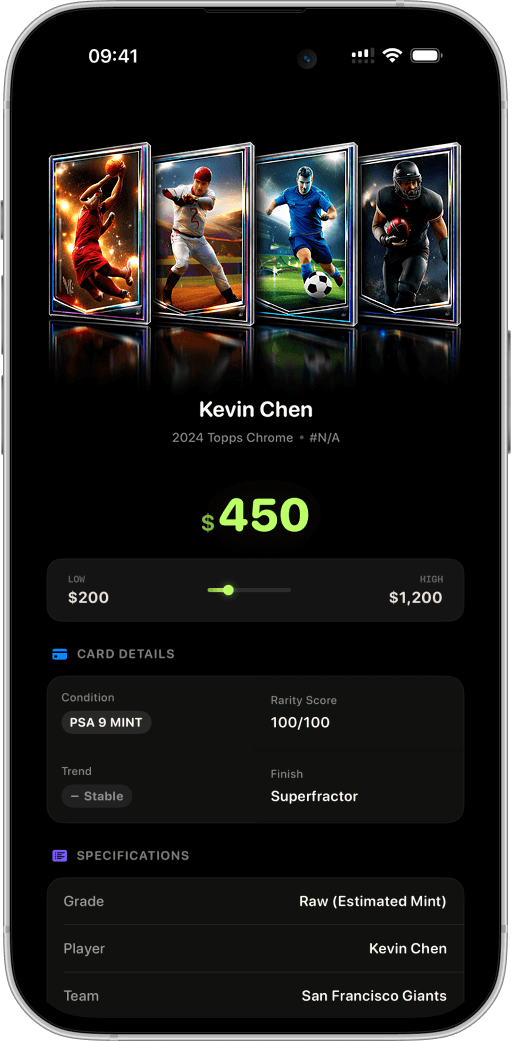
SnapCard TCG card scanner result showing a trading card game card with recent sold prices and a PSA-scale condition estimate

Scanning a trading card game card

The same three moves work for all three games. What changes is where each game prints the details that name the printing.

  1. 1

    Shoot the front

    Flat on a plain surface, phone held square above it. Keep glare off the set symbol, set code and collector number.

  2. 2

    Compare the printing

    Check the match against the card: set, number, edition and finish. A reprint or a different foil is a different listing.

  3. 3

    Decide what to do with it

    Read the completed sales and the PSA-scale estimate, then file it in a binder, list it, or set it aside for grading.

How each game marks the printing

Every trading card game reprints its staples, and each one leaves a different trail on the card. Knowing where to look is most of the work of pricing a TCG card, with or without a scanner.

Where Pokémon, Magic and Yu-Gi-Oh! cards print their set, edition, rarity and language
DetailPokémonMagic: The GatheringYu-Gi-Oh!
SetSet symbol beside the collector number; Base Set has noneSet symbol on the type line; set code bottom left since 2014Set code under the artwork, on the right
Edition1st Edition stamp under the art on early setsNo stamp; the first core sets differ by border and corners1st Edition or Limited Edition under the art, on the left
RarityCircle, diamond or star beside the numberSet symbol color and the letter on the info lineFoil on the name and the art
LanguageJapanese prints come in their own sets and numberingLanguage code on the info lineLanguage letters inside the set code

One collection for the whole shoebox

Plenty of collections mix a Pokémon binder, a box of Magic commons and a stack of baseball cards from the same garage. SnapCard scans all of them into one collection, with binders to keep them apart, search by name, set or number, and a portfolio total that recalculates from current sales.

A manual price override covers the cards you have a better number for, and purchase price and date fields let you see what each card cost you.

Where TCG prices come from

The prices shown are completed sales from eBay, Goldin, Heritage Auctions, PWCC and Pristine Auction. Graded cards and vintage holos trade heavily there, which is where an accurate number matters most.

Inexpensive playable singles change hands mostly on store marketplaces such as TCGplayer, which SnapCard does not read. For a card in the one-to-five-dollar range, compare with a store's market price before you sell.

Grading trading card game cards

PSA, BGS, SGC and CGC all grade Pokémon, Magic and Yu-Gi-Oh! cards, and SnapCard reads all four slab labels. For raw cards it gives an estimate on the PSA 1 to 10 scale from your photos of the front and back.

Holofoil surfaces are hard on any estimate. Scratches that only show at an angle are the usual gap between a photo-based estimate and the grade that comes back, so look over every holo under a lamp before paying a fee.

Centering is the one thing you can measure exactly

Measure the four borders and compare the wider side with the total. A card cut 60/40 on the front cannot be a PSA 10, however clean the holo is.

Card games in the catalog
3
Slab labels it reads: PSA, BGS, SGC, CGC
4
Venues the sale prices come from
5
Sports scanned by the same app
9

TCG card scanner questions

which trading card games does snapcard support

Pokémon, Yu-Gi-Oh! and Magic: The Gathering, the three games the app names. Cards from other games are not in its catalog.

can one app scan pokemon cards and sports cards

Yes. SnapCard scans Pokémon, Magic and Yu-Gi-Oh! cards and baseball, basketball, football, soccer, hockey, golf, tennis, boxing and wrestling cards, and saves them all to one collection.

Is there a free TCG card scanner app?

SnapCard costs nothing to download on iPhone and needs no account. Pro is $7.99 a week or $39.99 a year and adds unlimited scans, the complete condition analysis, the collection manager and iCloud sync.

does it scan japanese tcg cards

Many, with less consistent matches than English cards, because Japanese sets use their own numbering and have fewer recorded sales in the venues the app reads.

Can it tell a holo or foil from a regular card?

The match names the finish, and foil printings are separate entries. Flat light can hide a foil, so tilt the card until the shine shows before scanning.

Every game in one binder

Scan the card, confirm the printing, and see what it sold for, whichever game it comes from.

Download SnapCard free